Mind The Gender Low Pay Gap
The gender low pay gap has narrowed to its lowest level on record, yet over 2.5 million women still earn below the real Living Wage, the Living Wage Foundation says.
The organisation has found that 1 in 6 jobs held by women in the UK are paid below the real Living Wage – which is set by the Foundation as a wage people can actually get by on as opposed to the government minimum wage which leaves recipients relying on partners, parents or benefits.
The figures show that 2.5 million jobs done by women are paid below the real Living Wage, compared to 1.8 million low-paid jobs held by men. The low pay gender gap has narrowed to 4.5 percentage points, the lowest level since records began.
Insecurity
The figures are drawn from the Office for National Statistics Annual Survey of Hours and Earnings data which shows that while progress has been made in narrowing the low pay gender gap, millions of women remain in low-paid and insecure work.
Women account for well over half (58.6%) of all jobs paid below the real Living Wage across the UK.
In 2024, women were nearly 50% more likely to be low paid than men; in 2025, this has fallen to around a third more likely. The low pay gender gap now stands at 4.5 percentage points, its lowest level since the time series began in 2012.
However, the data also shows that low pay remains closely linked to insecure and part-time work. Women hold more than twice as many low-paid part-time roles as men (1.6 million compared to 800,000), highlighting the continued structural inequalities in the labour market.
International Women’s Day
Katherine Chapman, Executive Director of the Living Wage Foundation, said: “This year’s data shows that progress is possible. The low pay gender gap has narrowed to its lowest level on record, which is encouraging.
“But millions of women are still earning less than they need to meet everyday costs. Women continue to be overrepresented in low-paid and part-time work, which affects their financial security both now and in the long term.”
Chapman was speaking ahead of International Women’s Day (March 8). She added: “These findings are a reminder that tackling low pay must remain central to efforts to reduce gender inequality. Becoming a Living Wage Employer is a practical step businesses can take now to support women’s financial security and help build a fairer labour market.”
Tatiana, a housekeeper and advocate for the real Living Wage with lived experience of low pay, said:
“When I immigrated to the UK to improve my economic situation, my husband’s death forced me to face an emotional and financial reality. As a woman and a mother, the only job I could aspire to was cleaning, on minimum wage and with no knowledge of my rights.
“During the pandemic, I cleaned houses for less than minimum wage on a zero-hour contract, with no sick pay or holiday pay. I had to go out with a suitcase of cleaning products to deep clean houses for £40 a day. I finished each day completely exhausted, emotionally and financially frustrated.
“My daughters were in my home country and I had to try to save enough to bring them here and provide for them on my own. I worked 12-hour days in different places but the wages were always low. Just remembering that time brings a lump to my throat. It affected every part of my life, including my health.
“Today I feel happy as a mother because the real Living Wage has allowed me to ensure that my children can work, study, and progress on their own now that they are adults.”
Claire Reindorp, chief executive at Young Women’s Trust, said:
“Job insecurity is a blight on young women’s working lives. Insecure work disproportionately affects young women, particularly those who are racially minoritised, disabled or single parents. When young women are trapped in these contracts, it’s extremely difficult for them to move into secure, stable, fulfilling employment. Many are struggling to make ends meet, unable to secure sufficient hours, which makes planning for the future or even their weekly shop, very challenging. The Employment Rights Act promises change, yet these statistics show just how vital it is that its proposed ban on exploitative zero-hours contracts is implemented in full, without delay and is properly enforced.”
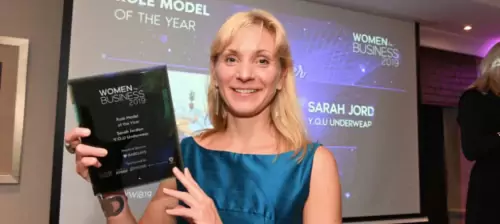
Sarah Jordan, founder and CEO of Oxford-based Living Wage Employer Y.O.U Underwear, said:
“Paying the real Living Wage is important to us because it shows our team that they are respected and valued and a core part of our business. When costs are so high, I just think it's fair that we pay people properly for the work that they do for us.
“It helps us attract and keep great staff and more broadly, it reflects the kind of equitable society we want to be part of. As a female-founded business employing many women, we know how important fair pay is to women’s financial security. For us, it’s not optional, it’s simply part of how we do business.”
Picture: Sarah Jordan, founder and CEO of Oxford-based Living Wage Employer Y.O.U Underwear.
www.livingwage.org.uk